Sunday, 20 November 2016

Personality and Communication

By: Johnny

What is personality? Obviously we all can think of what personality is in our heads, but how would you put it into words? Personality... what is it? What is it not? 

I'm currently taking Psychology 101, and from my professors lecture on personality, it's defined as important, relatively stable characteristics that account for consistent patterns of behavior. Weird, right? Not weird in the sense that that definition doesn't fit with personality because it's near spot on, but in the sense that it's weird seeing that word defined in the first place.

In psych we learned about a man named Phineas Gage. His story is fascinating and I suggest you check him out, but what he is known for is he was the first demonstration that the brain gave rise to personality. Damage to brain can cause someone's personality to drastically change without having any motor or cognitive function change or damage. A man by the name of Sigmund Freud had a psychodynamic personality theory, who's underlying assumption was that one's personality was comprised of unconscious forces, such as wishes and motives, as well as conscious forces. These two go well together when claiming that personality is not entirely deliberate.

Image Source
Personality and communication play crucial roles in the media and communication industry. Having the ability to identify a colleagues personality and then modifying your own behavior to cater to that colleague could be a huge advantage in the professional world. The dominant view of personality in psychology is a view where personality is broken down into five dimensions. These dimensions are:

  • Openness to Experience: imaginative vs. close minded
  • Conscientiousness: organized vs. unorganized
  • Extraversion: extroverted vs. introverted
  • Agreeableness: easy-going vs. uptight
  • Neuroticism: worried vs. calm


Why not resort to science when trying to get what you want in the workplace? A promotion or a raise could be a lot closer in reach than one might think.


Works Cited

Halpern, Diane, Gazzaniga, Michael, Heatherton, Todd. Psychological Science. Fifth edition.

              W.W. Norton & Company. 2015.

Women In The Media Industry

By: Emily 

President of the Journalism and Women's Symposium, Megan Kamerick, gave a thought provoking TED talk about women’s roles and representation in the media. Kamerick joined JAWS because she wanted female role models and was upset about the lagging status of women in her profession and what it meant for women’s image in the media. Surprisingly, only 24% of the people in the news are women, and stories written by men are often skewed in favor of their sub conscious ideals because news stories are essentially constructed by the writer to portray their ideals of the situation being reported. The Global Media Monitoring project found that news stories written by female reporters are more likely to challenge stereotypes. This information is very important to me and any other female wishing to go into the Media industry because it shows how important to the whole system a variety of views is. Another example of female misrepresentation in the media is the cover of Wired magazine. Women are more likely to be portrayed as victims and more likely to be defined by their body parts, and Wired magazine did just that in one of their issues. They wrote about breast tissue engineering, but the magazine had a provocative image of a woman's breasts as the cover. The change the industry needs can be done by employing and encouraging women to hold top jobs within the industry. A recent global survey found that 73% of the top media management jobs are still held by men. Kamerick states that one way to get more women into leadership is to have more women mentor them. She concluded her talk with a very thoughtful statement explaining that with a variety of views we’d all be better off if we had “the full picture” of stories not skewed by personal bias.

Works Cited

Megan Kamerick. TED. "Women Should Represent Women in Media" Online video clip. YouTube. YouTube, 21 August 2013. Web. 13 November 2016. sonal bias.

Press Freedom

By: Victoria

The Press Freedom Index is an annual ranking published by the Reporters Without Borders. They measure the level of freedom the press has on reporting information. What may surprise you is that the United States was actually only ranked 41 out of 180 countries in 2016. The Reporters Without Borders attributes this to the U.S. government’s “war on whistleblowers” (as cited in Wagner para. 3), with the most famous example of Edward Snowden having to seek asylum in Russia. Finland finds itself at the top of the list, while Eritrea is considered to have the worst press freedom in the world.

Freedom House finds that only 13% of the world has free press; where a journalist’s safety isn’t threatened, and there is minimal state intervention in the press (Dunham para. 2).

On the flipside, 46 percent of people live in countries where they do not enjoy free press (Dunham para. 3). For instance, in Egypt, where almost all their media outlets are pro-government, few journalists may dare to cross the line or even criticize the government in their writing (Dunham para. 10). Furthermore, Syria is one of the most dangerous places for journalists, where at least 14 were killed in the past year (Dunham para. 12).

In the top-ranked countries, the media as a fourth estate is generally considered what is important for a democracy (Gill para. 1). This is where the media can, as Gill’s puts it “to be the people’s watchdog” (Gill para. 6).

While many agree that media freedom is better than having none at all, the 2015 Charlie Hebdo attack left people wondering if too much a good thing may be detrimental after all. The Spanish interior minister discussed the need to “strike a balance between freedom and security” (as cited in Dunham para. 17), but was criticized by groups that advocated for free expression (Dunham para. 17).

This particular media issue is definitely a rather controversial one and best left for each country’s governments and most definitely along with their people to decide which they value more. 

Works Cited

Dunham, Jennifer. “Press Freedom in 2015: The Battle for the Dominant Message.” Freedom House, n.d., https://freedomhouse.org/report/freedom-press/freedom-press-2016. Accessed 14 Nov. 2016

Gill, Kathy. “What Is The Fourth Estate.” US Politics About.com, 23 Mar. 2016, http://uspolitics.about.com/od/politicaljunkies/a/fourth_estate.htm. Accessed 14 Nov. 2016.

Wagner, Laura. “U.S. Ranks 41st In Press Freedom Index Thanks To 'War On Whistleblowers'.” National Public Radio, 20 Apr. 2016, http://www.npr.org/sections/thetwo-way/2016/04/20/475017281/u-s-ranks-41st-in-press-freedom-index-thanks-to-war-on-whistleblowers?refresh=true. Accessed 14 Nov. 2016.

“2016 World Press Freedom Index.” Reporters Without Borders, 2016, https://rsf.org/en/ranking#. Accessed 14 Nov. 2016.

Sunday, 13 November 2016

The Ultimate Writer's Challenge: Writing a Full-Length Screenplay or Novel

By: Johnny

People who enjoy writing like to do lots of things when it comes to satisfying our writing desires and our writing cravings. We like to read to practice our understandings of certain forms of writing. We like to write to practice the ideas that we learn. All the different kinds of reading and all the different kinds of writing fall into the category of the ways us writers can be satisfied from our writing desires and cravings. Out of all these different forms of reading and writing there is one practice that stands alone as for the attention to detail and dedication required for its completion.

Writing a full novel-length story is something that's so incredibly daunting it can sometimes just seems unattainable. The amount of pure writing that's required is enough to heavily discourage most people from even considering trying it out. Whether this full-length story is in the form of a novel, or a script or screenplay, the workload necessary for it to be full length, and then to be a solid piece of writing, is astonishing on almost all levels. All of the brainstorming and planning that goes on beforehand, to the actual writing of the story, to all the editing and revising that happens before the piece is a finished final draft. It's an overwhelming amount of work to even think about and then I'm assuming the actual process is a grueling, but eventually highly rewarding one. 

Seth Rogen and Evan Goldberg started writing the script/screenplay for 
Superbad in 1995. The movie hit theaters in 2007.
I have a goal in my life, that I certainly hope to accomplish in the near future (maybe within 5 years), and that's to write a full-lengths story. The story will be fiction, and I'm sure I will have to start small. Writing a short story that's got a great deal of material to work with at first, and then eventually expanding and elongating it to reach its full novels length. I feel this process will only do good things for me as a writer, as it will be an enjoyable, satisfying, painfully thoughtful, and then immensely rewarding one. I sincerely cannot wait.

The Simpsons Just Made History!

By: Gigi 

The Simpsons a show about Homer’s family adventures has been around since 1989, yes that’s 27 years on air and this year Fox just signed the Simpsons up for season 29 and 30. This will make it the longest-running scripted TV show of all time, with a staggering 669 episodes after the 30th season. That's why it made history! This feat will mean they are taking the title form Gunsmoke a show that last 20 years and had 635 episodes!

The news was announced by Fox Television Group CEOs and chairman Dana Walden and Gary Newman as they stated that “This is yet another record-setting moment for what is truly a landmark series.”

And you might be asking yourself what make the Simpson’s so iconic? Well, here's a link of an article I wrote about three aspects that all great shows should have. The Simpsons have done extremely well in ensuring they have great imagery with that bright yellow color, relatable characters: don't we all have a messed up family, and lastly they a well written script! 

However, the Simpsons have other elements that aspiring media students should pay attention to, particularly these two: 

1. The ability to catch to attract new younger viewers whilst keeping the growing adult ones. 

The Simpsons writers have always used a technique of slapstick satire to get their points across. The use of this devise has meant that kids laugh at the slapstick whilst adults laugh at the satire. The ability to understand this fusion has meant that as reported by Fox Television the Simpsons have an audience of 7.2 million and has “won 32 Emmys, 34 Annie Awards, a 2016 People’s Choice Award, a 2016 Environmental Media Award, was the first animated series to win a Peabody Award and nabbed an Academy Award nomination in 2012.” Now that’s what you get for being catchy!

2. Be relevant! 

The Simpsons have also made headlines in the past  couple of weeks by being able to predict the  presidency of Donald Trump. This hasn’t been the  first time the Simpsons have made predictions that  have come true. However, what we learn from the  writers of the Simpsons the ability to comment  about current affairs and the state of America and the world. One might say that the writers where  seeing the state of chaos erupting in America and weren’t afraid to make fun of it. Thus, they still  stand the test of time.  

So as you watch another episode of great TV take the time to see these elements and maybe some of your own and tell us about them.

Work Cited:

News, ABC. "How 'The Simpsons' Has Stayed on Top." ABC News. ABC News Network, 08 Mar. 1970. Web. 17 Nov. 2016.

Wagmeister, Elizabeth. "The Simpsons; Makes TV History, Renewed for Record-Breaking 29th and 30th Seasons." Variety. Variety, 04 Nov. 2016. Web. 17 Nov. 2016.

The History of Facebook

By: Curtis

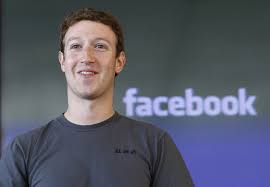
Image result for mark zuckerberg
Everyone has heard of Facebook and its ever so famous CEO Mark Zuckerberg, but has anyone actually looked at how Facebook was created? In 2003, when Mark Zuckerberg was a sophomore in Harvard University, he created a program, called Facemash. Facemash was a program that allowed Harvard students to post things that allowed other students to see if it was “Hot or not”.

Image result for facebook logo
On February 4th the following year, Mark and his fellow roommates and a friend launched thefacebook.com based on the students response to Facemash. It was a success and Peter Thiel funded them by giving $500,000. With the funding, Mark and his roommates dropped out of college and moved the Facebook Inc. to Palo Alto, California. In December 2004, thefacebook.com reached around one million active users. As the number of active users grew, other companies started to invest in Facebook Incorporation. In August of 2005, they changed thefacebook.com to facebook.com. To this day, Facebook still stands as one of the social media giants.

Works Cited

Malone, Jasmine. "The Rise of Facebook: History of a Social Network." The Telegraph. Telegraph Media Group, 15 Dec. 2010. Web. 13 Nov. 2016.


"Social Network Movie vs. Facebook True Story." ChasingtheFrog.com. N.p., n.d. Web. 13 Nov. 2016.

Response to Margaret Gould Stewarts TED talk “How giant websites are designed for you (and a billion others, too)”

By: Emily


Image Source
Image Source
Watching and discussing TED talks is a great way to get more insight on a topic or listen to other points of view. The TED talk I watched was by Margaret Gould Stewart titled, “How giant websites are designed for you (and a billion others, too)”. This was very interesting and gave me an insight on the process of designing a website for the users to effectively communicate through. Stewart worked with big companies such as Google, YouTube, and currently Facebook and shares in this video how those companies successfully manage and set up the sites for optimal usage. These large scale companies cater to a lot of people, making it a big task to change various features. To give you a taste of the major scale these companies are working with, Google processes over one billion search queries a day, and every minute over a hundred hours of video is uploaded to youtube; that’s more in a single day than all three major U.S. broadcast in the last five years combined. (1:09) Stewart stated that when designing for such a large scale “it requires a combination of audacity and humility”. (1:46) When designing a website used for communication, there’s no such thing as a little detail. Every small detail is important to the website and it’s function as a whole. For example, The Facebook button seems like a miniscule issue when considering redesigning, but, this button is seen on average of 22 billion times per day making it an important part of the website, and the designer remaking the like button spent over 280 hours over the course of months working on it. Our digital lives play a large part in our daily communication, and when dealing with something this prevalent, you have to understand who you’re designing for and the importance of it.

Works Cited

Margaret Gould Stewart. TED. "How giant websites are designed for you (and a billion others, too)” Online video clip. YouTube. YouTube, 5 August 2014. Web. 8 November 2016.